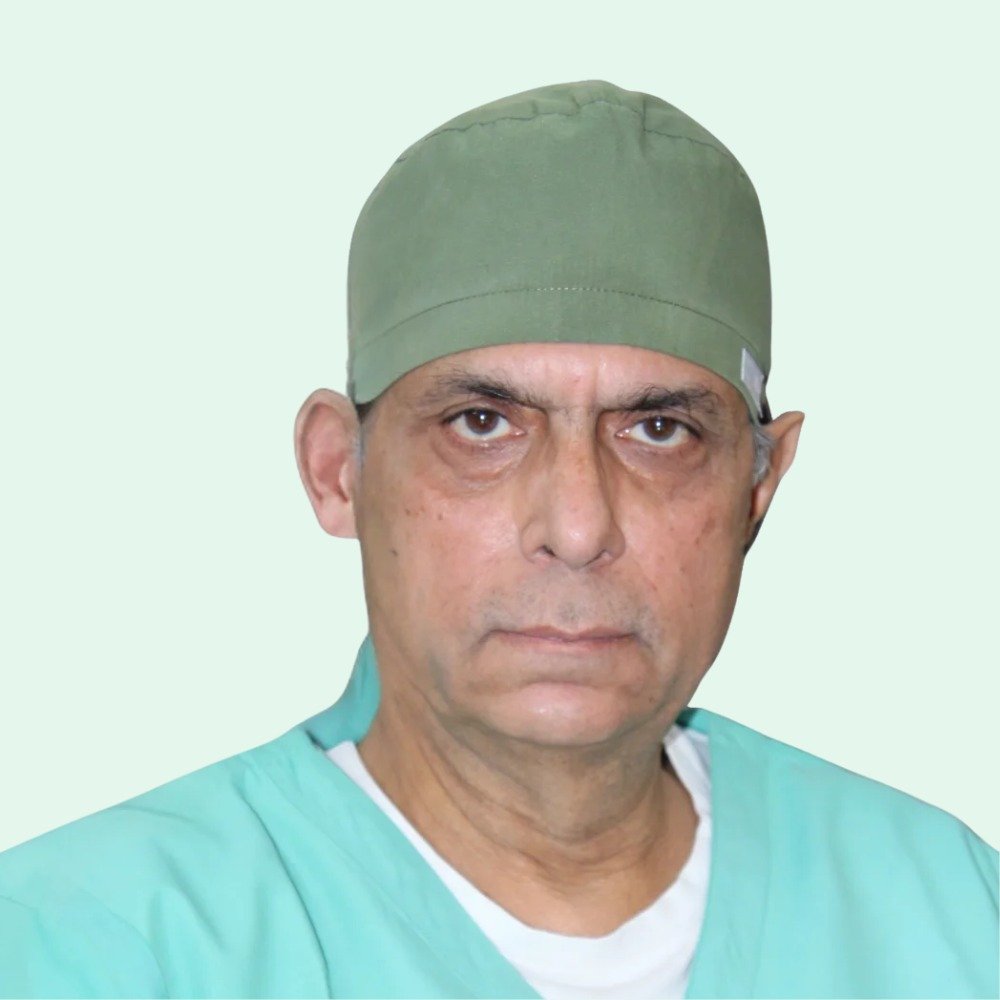
Dizziness, vertigo, and balance disorders can be among the most distressing conditions a person can experience—often leaving patients anxious, frustrated, and unable to perform even the simplest daily activities. At MedFirst ENT Centre, we understand the profound impact these symptoms have on your quality of life. Led by Dr. (Major) Rajesh Bhardwaj, a senior ENT surgeon with over 35 years of clinical experience, we offer comprehensive, evidence-based evaluation and treatment for all forms of vertigo and balance disorders, helping you find your footing again—literally and figuratively.
Prompt appointment confirmation with Dr. Rajesh Bhardwaj
The sense of balance is a complex interplay between three vital body systems:
Detects head movement and spatial orientation in real time.
Provides continuous spatial awareness and depth perception through visual input.
Receptors in muscles and joints that continuously sense body position and movement.
Accurate clinical differentiation and personalized bedside balance rehabilitation protocols.
BPPV is the most common cause of vertigo—accounting for nearly 50% of all vertigo cases. It occurs when tiny calcium carbonate crystals (otoconia) dislodge from their normal location in the utricle and migrate into the semicircular canals of the inner ear.
Accurate diagnosis through Dix-Hallpike maneuver. Non-invasive bedside repositioning maneuvers including the Epley Maneuver (gold-standard posterior canal), Semont Maneuver, and Barbecue Roll (horizontal canal)—often providing immediate relief in a single session, along with home exercise instructions.
Inflammatory conditions of the vestibular nerve (neuritis) or the entire labyrinth (labyrinthitis), often following a viral infection.
Thorough clinical evaluation, vestibular suppressant and anti-nausea medications, corticosteroids in select cases, specialized Vestibular Rehabilitation Therapy (VRT) to promote central compensation, and reassuring patient education.
A chronic inner ear disorder characterized by episodes of:
Low-sodium diet, caffeine/alcohol restriction, diuretics, betahistine, intratympanic steroid injections, intratympanic gentamicin for refractory cases, and surgical options (endolymphatic sac decompression, vestibular nerve section, or labyrinthectomy) when necessary.
Labyrinthine Concussion: Head trauma without skull fracture causing vertigo, sensorineural hearing loss, and tinnitus. Managed through comprehensive evaluation, vestibular rehabilitation, and symptomatic therapy.
Acoustic Neuroma (Vestibular Schwannoma): A benign tumor of the 8th cranial nerve causing unilateral hearing loss, tinnitus, vertigo/imbalance, and facial numbness. Diagnosed via audiometry and MRI with neurosurgical/radiosurgical coordination.
Dizziness originating from the cervical spine due to neck muscle spasms, cervical spondylosis, or whiplash. Managed through physiotherapy collaboration, cervical spine exercises, postural correction, and manual therapy.
Age-related changes in the vestibular system make seniors susceptible to falls. We provide thorough fall risk assessments, vestibular rehabilitation, home safety modifications advice, and polypharmacy reviews.
Accurate diagnosis is the cornerstone of effective vertigo and vestibular balance management.
Characterizing timing, triggers, duration, and associated symptoms. Specific bedside tests include:
Measures eye movements using infrared video goggles to differentiate peripheral vs. central vertigo:
Pure Tone Audiometry (PTA), Speech Audiometry, and Tympanometry to separate peripheral from central causes.
VEMP for otolith organ function (utricle/saccule) and Electrocochleography (ECoG) for Ménière's inner ear fluid pressure.
Arranged promptly when central causes (stroke, tumor, demyelination) or acoustic neuromas are suspected.
A specialized exercise-based program to promote central compensation, reduce dizziness/visual symptoms, and improve balance and gait:
Evidence-based medical management tailored to each condition:
Identifying triggers, dietary modifications, hydration, stress management, home safety, and fall prevention strategies.
While most vertigo is benign and inner-ear related, certain symptoms require immediate emergency medical attention:
Compassionate patient care backed by military precision and diagnostic mastery.
Dr. Bhardwaj's 35+ years of experience—including 15 years in the Indian Army and service at Siachen Glacier and the Jaffna battle casualty ward—bring unparalleled diagnostic precision and confidence.
Equipped with videonystagmography (VNG), pure tone audiometry, tympanometry, and high-definition endoscopy for comprehensive vestibular evaluation.
For BPPV patients, diagnosis and canalith repositioning are performed in-clinic—often providing instant relief in a single visit.
Dr. Bhardwaj personally evaluates every patient at every visit, taking time to listen, explain, and reassure with honest opinions and only necessary tests.
We work closely with vestibular physiotherapists, neurologists, and neurosurgeons to ensure comprehensive care.
Same-day appointments with the expert himself—no "doctor-on-call" substitutions.
"At MedFirst ENT Centre, we understand that dizziness is not just a symptom—it is an experience that can leave you feeling anxious, isolated, and afraid to move. Our mission is to provide you with an accurate diagnosis, effective treatment, and the reassurance you need to regain your confidence and independence. Whether your vertigo is a simple case of BPPV requiring a one-time repositioning maneuver or a complex vestibular disorder needing comprehensive rehabilitation, we are here to guide you every step of the way."
Where caring comes first.
📍 D-3/14, Ground Floor, Vasant Vihar
(Opposite Vasant Vihar Club, Opposite Shri Ram School)
New Delhi – 110057
📞 Direct Calls: +91-9871150032 | +91-9289861631